
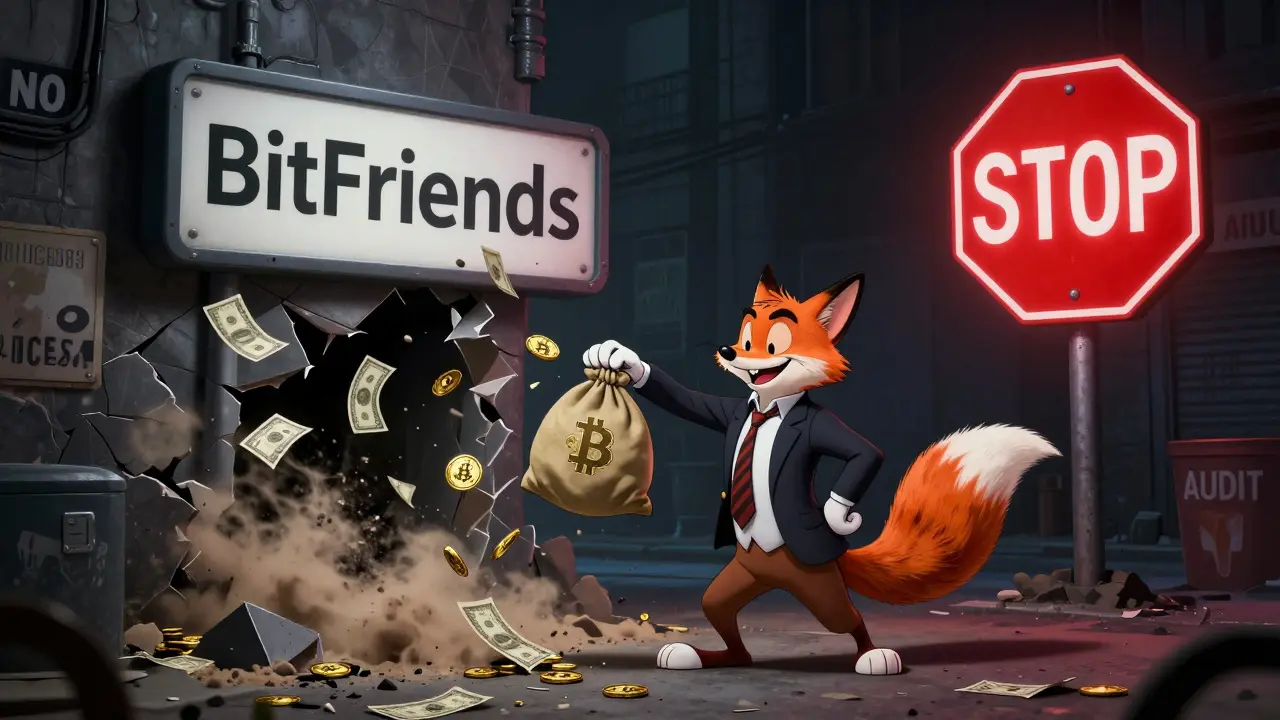
There’s no verified information about BitFriends Exchange anywhere credible. No official website, no regulatory license, no user reviews on trusted forums, and no mention in any major crypto database. That’s not normal. If a crypto exchange doesn’t exist in the public record, it’s not a coincidence - it’s a red flag.
Legitimate crypto exchanges like Binance, Coinbase, Kraken, and Bitstamp have been around for years. They’re listed on financial watchdog sites, have public team members, publish security audits, and answer to regulators. BitFriends Exchange has none of that. It’s invisible. And invisible platforms in crypto? They’re usually designed to disappear with your money.
Why You Shouldn’t Trust BitFriends Exchange
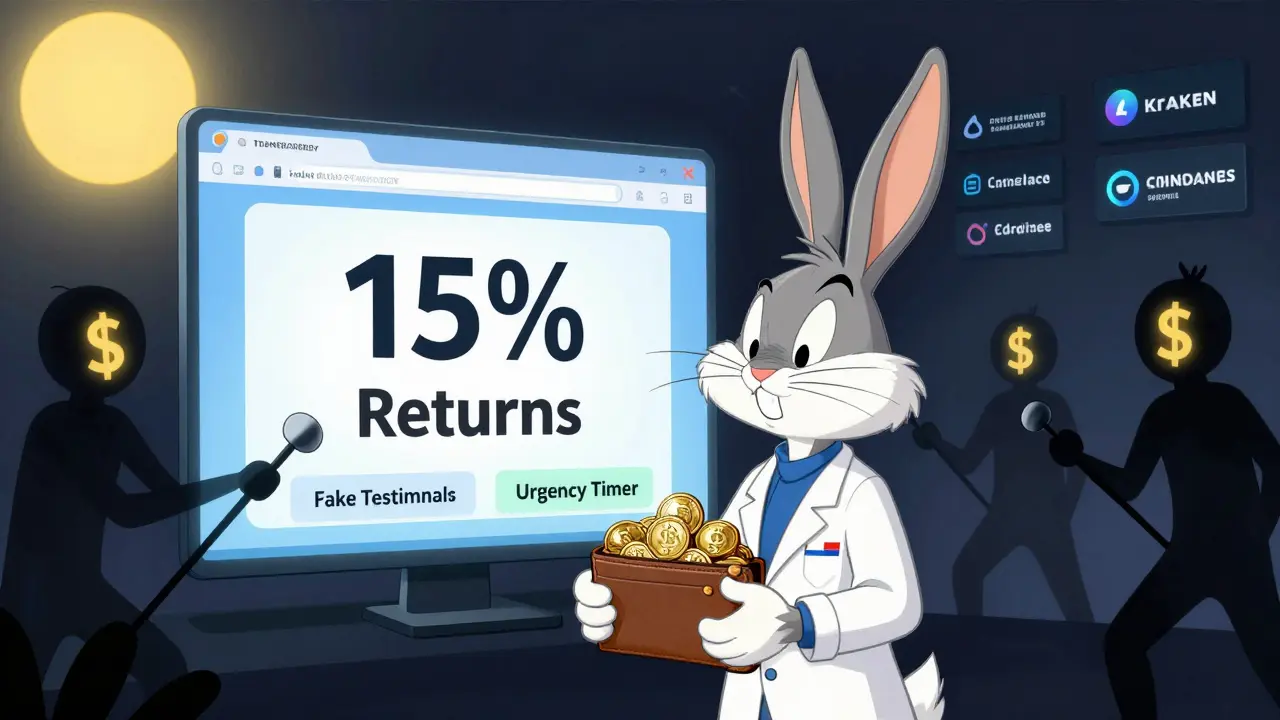
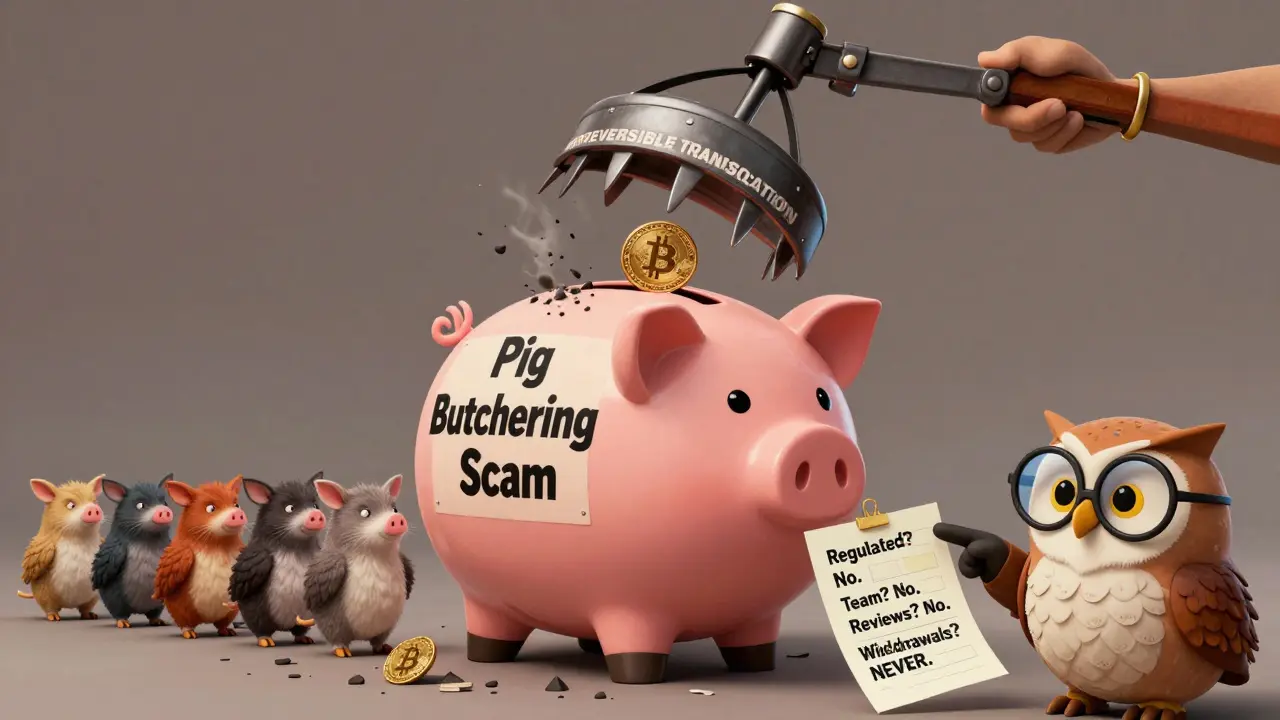
Imagine you see an ad promising 15% daily returns on Bitcoin. The site looks clean - sleek design, real-looking testimonials, even a live chat option. You deposit $500. Two days later, the site goes dark. No replies. No withdrawals. That’s not a glitch. That’s how pig butchering scams work.
BitFriends Exchange fits every pattern of a fake crypto exchange:
- No registered company address
- No licensing from any financial authority (FCA, ASIC, FINRA, etc.)
- No public team or leadership
- No third-party security audits
- No history of trading volume or user activity
These aren’t missing details - they’re deliberate omissions. Real exchanges broadcast this stuff. Fake ones hide it.
How Fake Exchanges Trick People
Fraudsters don’t just copy real sites. They build them better. They use fake press releases, hire actors to do “user interviews,” and even create fake Reddit threads to build trust. BitFriends Exchange might look real because it’s designed to look real. But real legitimacy leaves a trail.
Here’s how they do it:
- **Attractive offers**: “Zero fees,” “10x returns,” “Exclusive early access.”
- **Fake social proof**: Photos of smiling users, fake Twitter/X accounts with hundreds of followers.
- **Urgency tactics**: “Only 3 spots left!” or “Deposit before midnight!”
- **No withdrawal proof**: You can’t find a single video or screenshot of someone withdrawing funds from BitFriends.
These tricks work because people want to believe. They want to think they found a hidden gem. But in crypto, if it sounds too good to be true, it’s not a gem - it’s a trap.
What Real Crypto Exchanges Look Like
Compare BitFriends to a real exchange like Kraken. Kraken has been operating since 2011. It’s registered with FinCEN in the U.S., complies with AML laws in over 50 countries, and has undergone multiple independent security audits. Its CEO is publicly known. Its trading volume is public. Its customer support is documented with real ticket resolution times.
Same with Bitstamp - founded in 2011, regulated in the EU, audited annually, and used by institutions. These exchanges don’t hide. They advertise their compliance because trust is their product.
BitFriends doesn’t do any of that. It doesn’t even try.
Red Flags You Can’t Ignore
If you’re even thinking about using BitFriends Exchange, ask yourself these questions:
- Can you find its headquarters? No? That’s a red flag.
- Is there a privacy policy or terms of service with real legal language? Or just vague, copy-pasted text? That’s a red flag.
- Does it accept bank transfers or credit cards? Real exchanges do. Fake ones only take crypto deposits - so they can vanish without a trace.
- Can you find any independent reviews on Trustpilot, Reddit, or CryptoSlate? If not, that’s a red flag.
- Has it ever been mentioned by CoinGecko, CoinMarketCap, or CoinCheckup? No? Then it’s not a real exchange.
One red flag might be a mistake. Five? It’s a scam.
What Happens When You Deposit
If you send crypto to BitFriends Exchange, here’s what you can expect:
- Your funds go to a wallet controlled by unknown actors.
- You’ll see a fake dashboard showing fake profits.
- You’ll be encouraged to deposit more to “unlock higher returns.”
- When you try to withdraw, they’ll demand fees, taxes, or KYC documents - none of which are real.
- Eventually, the site disappears. Your crypto is gone.
There’s no recovery. Blockchain transactions are irreversible. Once it’s sent, it’s gone forever.
How to Stay Safe
Stick to exchanges with a track record. Here’s what to look for:
- Regulation: Is it licensed in the U.S., EU, UK, Australia, or Japan?
- Transparency: Can you find the company’s legal name, address, and team?
- Security: Does it offer 2FA, cold storage, and regular audits?
- History: Has it been around for more than 3 years?
- Community: Are real users talking about it on trusted forums?
If you’re unsure, check CoinGecko’s list of top 10 exchanges. Or look at CoinMarketCap’s “Trusted” badge. These platforms don’t pay to be listed - they earn it.
Alternatives to BitFriends Exchange
If you’re looking for a safe place to trade crypto, here are four real options:
| Exchange | Founded | Regulated In | Security Audits | Supported Fiat |
|---|---|---|---|---|
| Kraken | 2011 | U.S., EU, Canada | Yes (multiple) | USD, EUR, CAD |
| Coinbase | 2012 | U.S., UK, EU | Yes (annual) | USD, EUR, GBP |
| Bitstamp | 2011 | EU (Luxembourg) | Yes (quarterly) | USD, EUR, GBP |
| Binance | 2017 | Multiple (with local entities) | Yes (ongoing) | USD, EUR, JPY, AUD |
All four have billions in daily trading volume, real customer support teams, and public records of compliance. They’re not perfect - but they’re real.
Final Verdict
BitFriends Exchange is not a crypto exchange. It’s a scam waiting to happen. There’s zero evidence it exists as a legitimate business. Every sign points to fraud. If you’ve already deposited, stop trying to withdraw - it won’t work. Report it to your local financial regulator. If you’re thinking of signing up? Don’t. Walk away.
Crypto is risky enough without adding fake platforms into the mix. Stick to the ones with history, transparency, and accountability. Your money - and your peace of mind - will thank you.
Is BitFriends Exchange a real crypto exchange?
No, BitFriends Exchange is not a real crypto exchange. There is no verifiable information about its existence, no regulatory registration, no public team, no security audits, and no presence on trusted platforms like CoinGecko or CoinMarketCap. It matches the pattern of fraudulent platforms designed to steal funds.
Why can’t I find BitFriends Exchange on CoinGecko or CoinMarketCap?
Legitimate crypto exchanges are listed on CoinGecko and CoinMarketCap after meeting strict criteria: verified company details, trading volume, security practices, and regulatory compliance. BitFriends Exchange doesn’t meet any of these standards, which is why it’s absent. Its absence is a major red flag.
Can I recover my money if I deposited into BitFriends Exchange?
Recovery is extremely unlikely. Crypto transactions are irreversible by design. Once funds are sent to a scam exchange, they’re typically moved through multiple wallets and mixed with other funds, making tracing nearly impossible. Law enforcement rarely recovers funds from these scams. The best action is to report the site to your national financial authority.
What are the most common scams linked to fake exchanges like BitFriends?
Fake exchanges like BitFriends are often part of “pig butchering” scams - where scammers build trust over weeks, then convince victims to deposit large sums. Other related scams include fake staking rewards, fake customer support impersonating real platforms, and rug pulls where the platform suddenly shuts down. All rely on urgency, false promises, and fake social proof.
How do I verify if a crypto exchange is legitimate?
Check for: 1) A registered company name and physical address, 2) Regulatory licenses from authorities like the FCA, ASIC, or FinCEN, 3) Public security audits from firms like CertiK or Hacken, 4) Real user reviews on independent sites like Trustpilot or Reddit, and 5) Presence on CoinGecko or CoinMarketCap. If even one of these is missing, treat it as high-risk.
Sahithi Reddy
March 15, 2026 AT 08:58Carol Lueneburg
March 15, 2026 AT 13:23George Hutchings
March 17, 2026 AT 03:21Henrique Lyma
March 18, 2026 AT 13:37Elizabeth Kurtz
March 20, 2026 AT 13:03john peter
March 21, 2026 AT 15:37Marc Morgan
March 21, 2026 AT 18:00shreya gupta
March 22, 2026 AT 13:45Heather James
March 23, 2026 AT 11:37Sarah Hammon
March 24, 2026 AT 14:31iam jacob
March 25, 2026 AT 10:26Jesse Pals
March 26, 2026 AT 12:07Ann Liu
March 27, 2026 AT 01:36Dionne van Diepenbeek
March 27, 2026 AT 17:48Jerry Panson
March 28, 2026 AT 00:20Katrina Smith
March 28, 2026 AT 21:34Anastasia Danavath
March 29, 2026 AT 03:26rajan gupta
March 29, 2026 AT 19:59Billy Karna
March 30, 2026 AT 10:00Cheri Farnsworth
April 1, 2026 AT 01:39Gene Inoue
April 2, 2026 AT 16:12Ricky Fairlamb
April 4, 2026 AT 14:05Jessica Beadle
April 6, 2026 AT 09:22Lauren J. Walter
April 7, 2026 AT 10:43