

Imagine walking into a grocery store in San Salvador in 2021. You pick up your groceries, walk to the register, and instead of handing over US dollars or swiping a credit card, you scan a QR code on your phone to pay with Bitcoin. This wasn't a sci-fi movie scene; it was the reality for millions of people when El Salvador became the first nation in history to adopt Bitcoin as official legal tender alongside the US dollar. It was a bold, controversial experiment that captured the world's attention. But if you think this is still how things work today, you are looking at history, not the present.
By July 2026, the story has changed dramatically. The mandatory requirement for businesses to accept Bitcoin has been stripped away. The government’s aggressive push for daily usage has cooled. So, what actually happened? Did the dream die, or did it just evolve? Let’s look at the facts, the failures, and the surprising financial wins behind this unique economic experiment.
The Bold Beginning: September 2021
To understand where we are, we have to look at where it started. On September 7, 2021, President Nayib Bukele signed the Bitcoin Law. The goal was ambitious: promote financial inclusion, reduce the cost of remittances sent by Salvadorans living abroad, and attract investment in new technologies. At the time, nearly half of the population lacked access to traditional banking services. The idea was that Bitcoin could bridge that gap.
The government didn’t just pass a law; they built an entire ecosystem around it. They launched the Chivo wallet, a state-sponsored digital wallet designed to facilitate Bitcoin transactions for citizens. To get people on board, the government deposited $30 worth of Bitcoin into every account. Gas stations offered discounts for paying with the app. It felt like a revolution.
But the launch day was chaotic. The Chivo wallet servers crashed almost immediately due to overwhelming traffic. At the same time, the price of Bitcoin plummeted, causing the country to face a paper loss of roughly $3 million on its initial holdings. Over 1,000 protesters gathered outside the Supreme Court, worried about the volatility of their money. Despite the technical glitches, the download numbers were staggering. Within a month, 3 million people had downloaded the Chivo wallet. That represented 46% of the population, far outstripping the number of people who had traditional bank accounts.
The Reality Check: High Downloads, Low Usage
Here is the hard truth that often gets ignored: downloading an app is not the same as using it. While the Chivo wallet had millions of users, actual transaction volume remained surprisingly low. In the first month after adoption, only 12% of consumers reported using cryptocurrency for payments. Even more telling, 93% of surveyed companies said they received zero Bitcoin payments during that period.
Why the disconnect? For most people, stability matters more than innovation. The US dollar is stable. Bitcoin is volatile. If you are buying bread and milk, you don’t want the price to change by 5% between the time you walk into the store and the time you check out. By 2024, reports showed that 92% of Salvadorans did not use Bitcoin for daily transactions. Only 5% of citizens paid taxes with it, and just 20% of large firms accepted it.
Technical issues also eroded trust. The Chivo wallet suffered from hacking incidents and user interface problems. Many merchants struggled to integrate the payment systems. The friction was too high for everyday commerce. People preferred the simplicity and predictability of cash or established mobile money platforms that operated in dollars.
The Turning Point: IMF Pressure and Policy Reversal
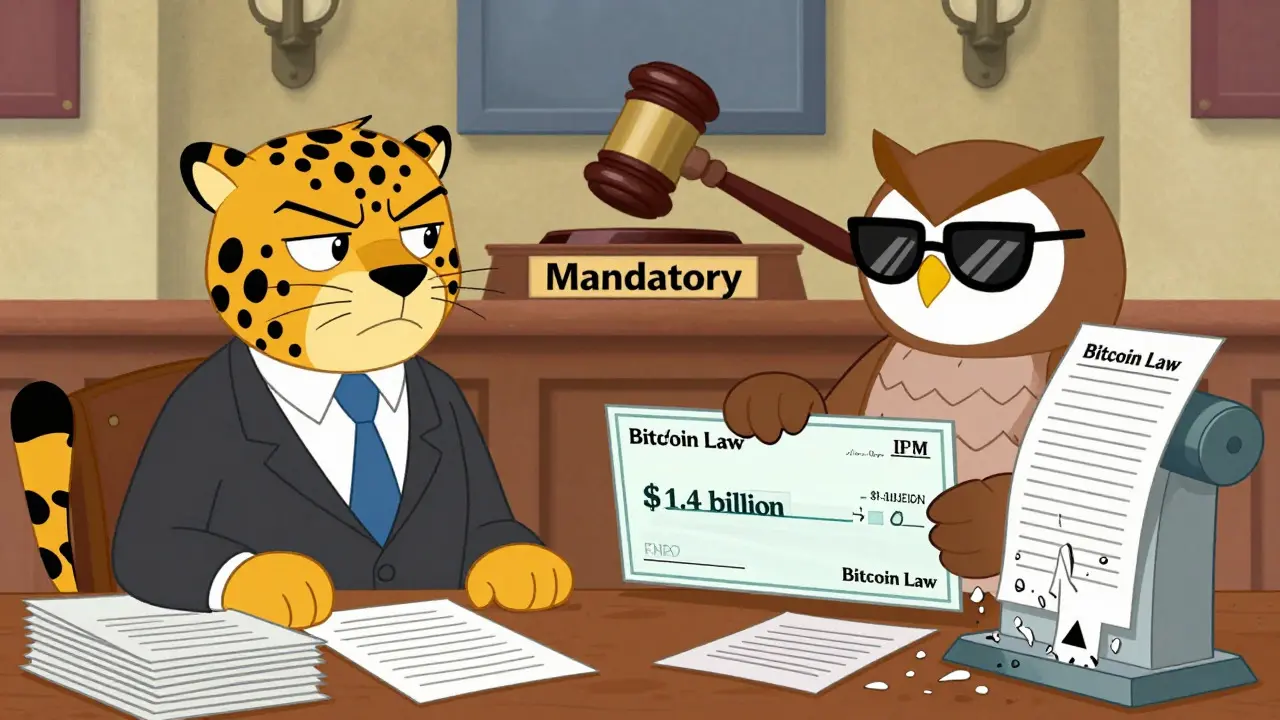
The real shift happened in early 2025. El Salvador needed financial help. The country faced significant debt challenges and required a lifeline. The International Monetary Fund (IMF), a global organization that provides loans and policy advice to member countries, stepped in with a $1.4 billion loan agreement. But there was a catch.
The IMF has long been skeptical of Bitcoin as a national currency. They argued that the mandatory acceptance of Bitcoin created fiscal risks and lacked transparency. As part of the deal, El Salvador had to modify the Bitcoin Law. On January 29, 2025, the Legislative Assembly voted 55-2 to change the rules. The new legislation took effect on May 1, 2025.
What changed? The word "currency" was removed from Bitcoin’s legal status. While Bitcoin technically remained "legal tender" in name, the obligation for private businesses to accept it was eliminated. More importantly, the government banned the use of Bitcoin for paying taxes or state bills. Economist Rafael Lemus summed it up perfectly: "Bitcoin no longer has the strength of legal tender... the government tried to force it into existence, and it didn't work."
This was a major retreat. President Bukele himself admitted that making Bitcoin an official currency was one of his government’s "most unpopular" measures. The pressure from international financial institutions proved stronger than domestic political will.
The Silver Lining: A Profitable Reserve Strategy
If the daily usage failed, did the whole experiment fail? Not entirely. While the social experiment stumbled, the financial strategy yielded surprising results. El Salvador didn’t just talk about Bitcoin; it bought it. And it held onto it through the bear markets.
As of early 2025, the country held 688 Bitcoin in reserve, which was worth approximately $574 million. This represented a profit of $287 million. That’s right-while the average citizen wasn’t using Bitcoin to buy coffee, the government was sitting on a healthy profit from its strategic purchases. In March 2025, the government expanded its holdings further, bringing the total Strategic Bitcoin Reserve Fund to 6,102 coins, valued at around $500 million.
This distinction is crucial. The failure of Bitcoin as a medium of exchange (for buying goods) did not mean it failed as a store of value for the state treasury. The government separated its investment strategy from its monetary policy. It stopped forcing people to use it for payments but continued to treat it as a valuable asset class, similar to gold.

Current Status: Voluntary Adoption and Tech Hub Ambitions
So, what is the situation in El Salvador today in July 2026? Bitcoin is no longer mandatory. Businesses can choose whether or not to accept it. Most still prefer the US dollar. However, the infrastructure remains. The Lightning Network nodes installed across the country are still active. The Chivo wallet still exists, though its role has diminished from a state-mandated tool to a voluntary option.
El Salvador is pivoting its narrative. Instead of focusing on daily transactions, the country is positioning itself as a hub for cryptocurrency innovation and investment. The PLANB Forum 2025, held in January, was the largest crypto assets conference in Central America. This signals a shift toward attracting tech companies, developers, and investors rather than trying to convert every street vendor into a Bitcoin merchant.
Tourism also benefited from the initial hype. While it didn’t offset all the economic costs, the global attention put El Salvador on the map in a way few developing nations achieve. The country is now seen as a jurisdiction friendly to digital assets, even if it doesn’t mandate their use.
| Feature | September 2021 - May 2025 | May 2025 - Present (July 2026) |
|---|---|---|
| Legal Status | Official Legal Tender (Mandatory) | Legal Tender (Voluntary/Private Use Only) |
| Business Obligation | Required to accept Bitcoin | No obligation to accept Bitcoin |
| Tax Payments | Allowed via Bitcoin | Banned; must be paid in USD |
| Government Promotion | Aggressive (Chivo Wallet subsidies) | Minimal/Strategic Investment Focus |
| Primary Goal | Financial Inclusion & Daily Commerce | Investment Hub & Reserve Asset |
Lessons Learned: Why Mandates Fail
The El Salvador experiment offers valuable lessons for any country considering digital currencies. First, you cannot force adoption through legislation alone. Money requires trust. If people don’t trust the stability or utility of the currency, they won’t use it, no matter what the law says. Second, infrastructure matters. Without reliable internet, digital literacy, and easy-to-use interfaces, technology solutions fall flat in developing economies.
Third, volatility is a killer for daily commerce. Bitcoin’s price swings make it unsuitable for pricing goods and services in a small economy. Finally, international pressure is real. For smaller nations dependent on global financial institutions, going against the grain carries significant economic risks.
El Salvador’s journey shows that while Bitcoin may not be ready to replace the dollar in your pocket, it can still play a role in national reserves and technological innovation. The dream of a fully crypto-based society has faded, but the reality of a crypto-friendly business environment remains.
Is Bitcoin still legal tender in El Salvador in 2026?
Technically, yes, but with major caveats. Since May 2025, Bitcoin retains the title of "legal tender," but the mandatory requirement for businesses to accept it was removed. It is now voluntary for private transactions. Furthermore, it cannot be used to pay taxes or government bills, which must be settled in US dollars.
Why did El Salvador change its Bitcoin law?
The change was driven by conditions set by the International Monetary Fund (IMF) as part of a $1.4 billion loan agreement. The IMF argued that mandatory Bitcoin acceptance posed fiscal risks and lacked transparency. Additionally, low public adoption and persistent technical issues with the Chivo wallet made the original policy unsustainable.
Did El Salvador make a profit from its Bitcoin holdings?
Yes. Despite the failure of daily adoption, the government’s investment strategy was successful. As of early 2025, El Salvador held Bitcoin reserves worth approximately $574 million, representing a profit of $287 million. By mid-2025, the Strategic Bitcoin Reserve Fund grew to 6,102 coins.
Can I still use the Chivo wallet in El Salvador?
Yes, the Chivo wallet is still available for voluntary use. However, it no longer receives the same level of government promotion or subsidies. Its usage has declined significantly compared to the peak in 2021, as most citizens prefer traditional banking or dollar-based mobile payment apps.
How many people actually used Bitcoin for transactions before the law changed?
Adoption was much lower than expected. By 2024, 92% of Salvadorans did not use Bitcoin for transactions. In the first month of implementation, only 12% of consumers used cryptocurrency, and 93% of businesses reported receiving no Bitcoin payments. The primary barrier was Bitcoin's volatility and technical difficulties.