
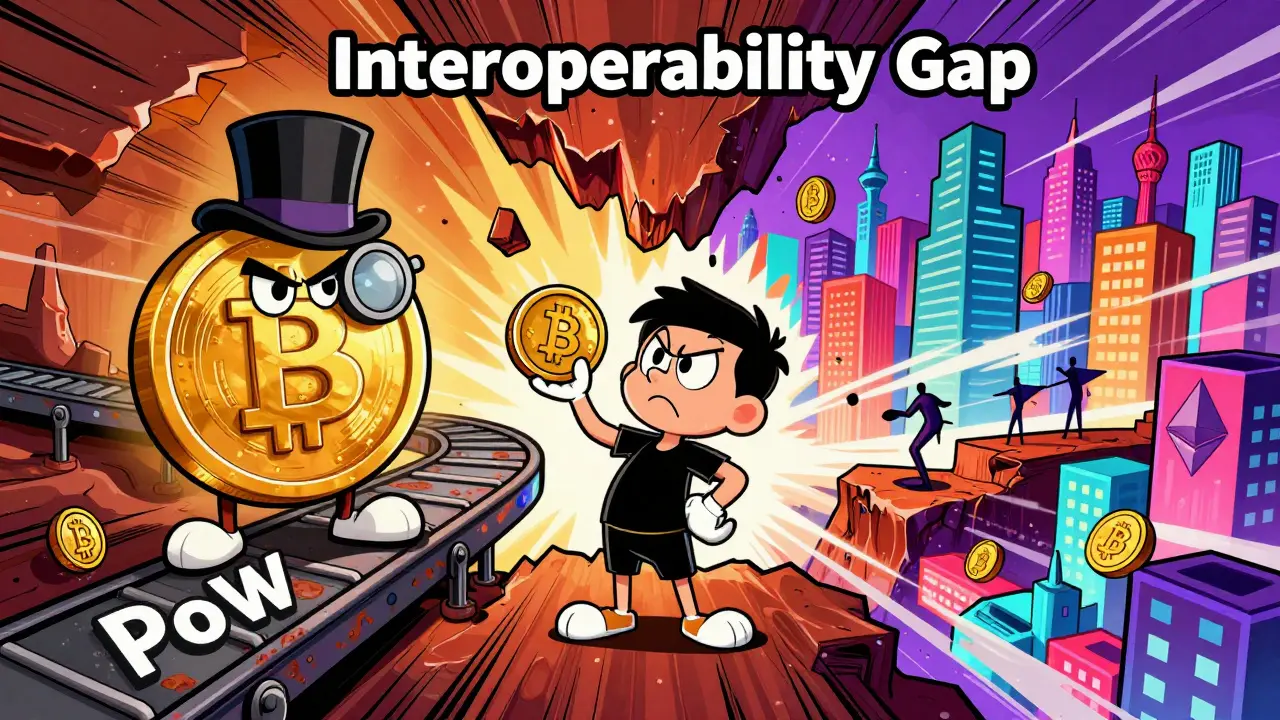
Imagine holding Bitcoin but wanting to earn yield on Ethereum. It sounds impossible because these two giants speak completely different languages. Bitcoin runs on a simple proof-of-work chain, while Ethereum hosts complex smart contracts. They don't talk to each other natively. This is where wrapped assets come in. They act as the universal translator, allowing your native coins to function seamlessly on foreign blockchains.
Wrapped assets are tokenized versions of original cryptocurrencies that are backed one-to-one by underlying assets. Think of them as digital receipts. You hand over your real asset to a custodian, and they give you a wrapped version on a different network. This mechanism bridges interoperability gaps between incompatible blockchain protocols, turning isolated silos into a connected financial ecosystem. Without this technology, much of the Decentralized Finance (DeFi) boom would simply not exist.
How Wrapped Assets Solve the Interoperability Problem
The core issue in crypto is fragmentation. Each blockchain operates in its own bubble. If you have Bitcoin, it stays on the Bitcoin network. You can't use it directly in an Ethereum lending protocol like Aave or a decentralized exchange like Uniswap. Wrapped assets solve this by creating a mirror image of your asset on the target chain.
The process relies on a specific workflow involving trusted custodians. Here is how it typically works:
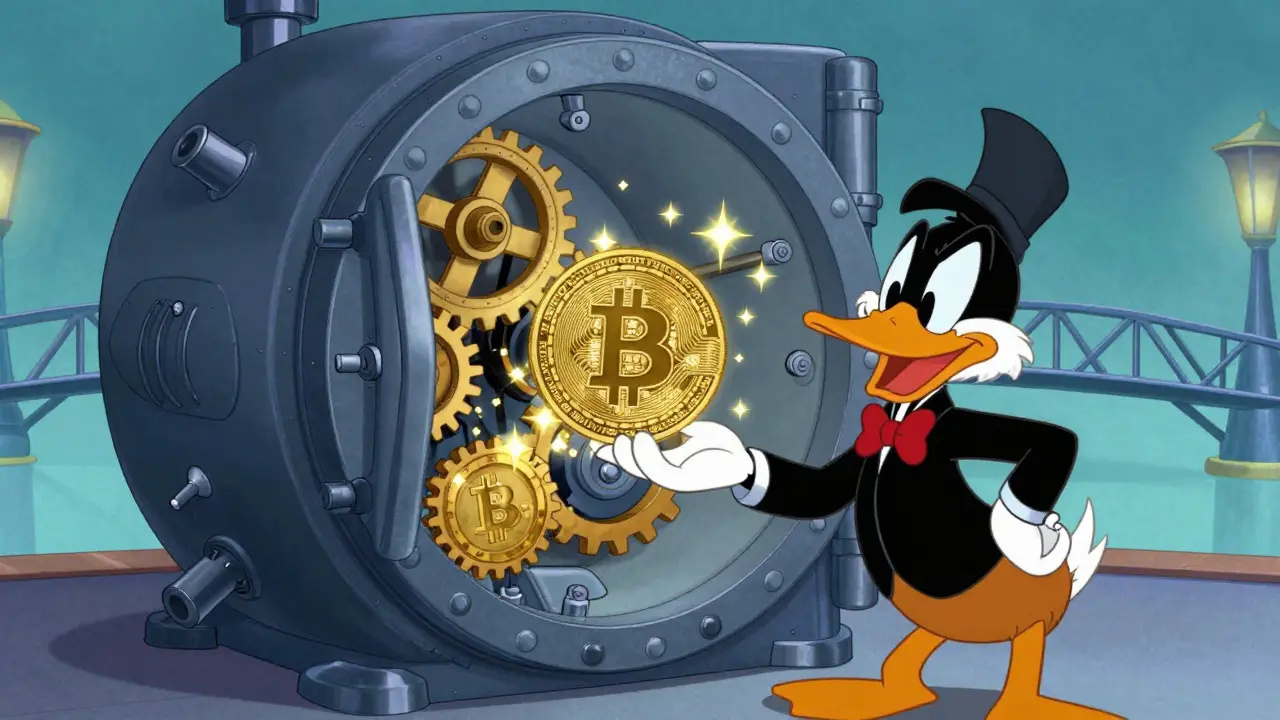
- Locking: You send your native cryptocurrency (e.g., BTC) to a secure vault managed by a custodian or a multi-signature wallet.
- Minting: The custodian verifies the deposit and mints an equivalent amount of wrapped tokens (e.g., WBTC) on the destination blockchain (e.g., Ethereum).
- Usage: You now hold the wrapped token, which behaves like any other ERC-20 token on Ethereum. You can trade, lend, or stake it.
- Burning: When you want your original asset back, you send the wrapped token to be burned. The custodian releases the locked native asset from the vault back to your wallet.
This mint-and-burn mechanism ensures that the circulating supply of the wrapped token always matches the amount of native assets held in reserve. This one-to-one backing maintains price parity, ensuring your wrapped Bitcoin always tracks the value of actual Bitcoin closely.
Enhanced Liquidity and Market Access
Liquidity is the lifeblood of DeFi. For a long time, Bitcoin was largely excluded from this ecosystem due to its technical limitations. Wrapped assets changed that dynamic entirely. By wrapping Bitcoin, developers unlocked billions of dollars in liquidity for Ethereum-based applications.
Consider the impact on decentralized exchanges (DEXs). Platforms like Uniswap and Curve rely on deep liquidity pools to minimize slippage. The introduction of WBTC allowed traders to swap Bitcoin against thousands of other tokens instantly without leaving the Ethereum network. This aggregation of liquidity benefits everyone. It tightens spreads, reduces transaction costs, and provides more stable pricing for all participants.
Moreover, wrapped assets enable cross-chain trading capabilities that were previously impossible. Users can trade assets from multiple blockchain networks on single decentralized interfaces. This expands the range of available trading pairs and gives investors access to opportunities that would otherwise require moving funds through centralized exchanges, which often involve higher fees and security risks.
Unlocking Yield Opportunities for Native Holders
One of the most compelling reasons to use wrapped assets is the ability to put idle capital to work. Holding Bitcoin in a cold wallet is safe, but it doesn't generate income. With wrapped assets, you can participate in various yield-generating strategies across the DeFi landscape.
You can use wrapped tokens as collateral for borrowing. For example, if you need cash but don't want to sell your Bitcoin, you can wrap it to get WBTC, deposit it into a lending protocol like Aave or Compound, and borrow stablecoins against it. This allows you to maintain your exposure to Bitcoin's price appreciation while accessing immediate liquidity.
Additionally, wrapped assets open the door to yield farming and staking. Many DeFi protocols offer incentives for providing liquidity or locking up assets. By converting your native tokens into their wrapped counterparts, you can join these pools and earn rewards in the form of governance tokens or interest payments. This transforms static holdings into productive assets, enhancing the overall return on investment for crypto holders.
Transaction Efficiency and Cost Savings
Beyond financial yields, wrapped assets offer tangible technical advantages regarding speed and cost. Native Bitcoin transactions can be slow and expensive during periods of high network congestion. Fees can spike dramatically, making small transfers economically unviable.
In contrast, wrapped tokens like WBTC operate on the Ethereum network (or Layer 2 solutions built on top of it). While Ethereum gas fees can also vary, the architecture allows for faster confirmation times compared to Bitcoin's ten-minute block intervals. Furthermore, the efficiency of smart contract interactions on Ethereum means that complex operations-like swapping, lending, and arbitraging-can happen in a single transaction. This streamlined experience saves users time and reduces the friction associated with managing assets across multiple chains.
For merchants and businesses, this efficiency is crucial. Accepting wrapped tokens allows companies to integrate crypto payments without building complex infrastructure for every single blockchain. A merchant can accept WBTC via standard Ethereum payment gateways, simplifying accounting and reconciliation processes.

Risks and Considerations: The Custodial Trust Model
While the benefits are significant, it is essential to understand the risks involved. Wrapped assets introduce a layer of centralization into an otherwise decentralized system. The reliance on custodians creates a counterparty risk. If the custodian is hacked, goes bankrupt, or acts maliciously, the wrapped tokens could lose their backing.
Users must evaluate the transparency and security measures of the wrapping protocol. Reputable projects publish regular audits and provide proof of reserves. However, no system is immune to failure. Diversification and choosing established, widely-audited wrapped assets like WBTC can mitigate some of these risks, but they cannot eliminate them entirely.
Another consideration is the potential for de-pegging. Although rare, market stress or technical glitches can cause the price of a wrapped token to deviate temporarily from its underlying asset. Traders should monitor these prices closely, especially when using large amounts as collateral, to avoid liquidation events.
| Feature | Native Asset (e.g., BTC) | Wrapped Asset (e.g., WBTC) |
|---|---|---|
| Network Compatibility | Single Chain Only | Cross-Chain (Target Network) |
| DeFi Participation | Limited/None | Full Access (Lending, DEXs) |
| Security Model | Decentralized Consensus | Custodial/Multi-Sig Reliance |
| Transaction Speed | Slower (Block Time Dependent) | Faster (Smart Contract Execution) |
| Yield Generation | No Native Yield | Yes (Staking, Lending) |
The Future: Trustless Bridging and Real-World Assets
The industry is actively working to address the centralization concerns inherent in current wrapping models. Future developments focus on trustless bridging mechanisms that use cryptographic proofs rather than human custodians. These innovations aim to preserve the security guarantees of decentralization while maintaining cross-chain functionality.
Furthermore, the concept of wrapping is expanding beyond cryptocurrencies. We are seeing the emergence of wrapped real-world assets (RWAs), such as gold, bonds, and real estate. By tokenizing these traditional assets and wrapping them for blockchain compatibility, DeFi could attract institutional capital and broaden its appeal to mainstream investors. This evolution suggests that wrapped assets will remain a fundamental piece of infrastructure in the multi-chain future of finance.
What is the difference between WBTC and BTC?
BTC is the native cryptocurrency of the Bitcoin blockchain. WBTC (Wrapped Bitcoin) is an ERC-20 token on the Ethereum blockchain that represents Bitcoin. One WBTC is pegged 1:1 to one BTC. The key difference is usability: WBTC can interact with Ethereum smart contracts, DeFi protocols, and dApps, whereas native BTC cannot directly participate in these ecosystems.
Are wrapped assets safe to use?
Wrapped assets carry counterparty risk because they rely on custodians to hold the underlying assets. If the custodian is compromised, the wrapped tokens may lose value. However, reputable projects like WBTC use multi-signature wallets, regular audits, and transparent reserve reports to enhance security. Users should always research the custody model before engaging with less common wrapped tokens.
How do I convert my native crypto to a wrapped version?
You can convert native crypto to wrapped versions through official wrapping portals or supported exchanges. Typically, you send your native asset to a designated address, and after verification, the wrapped token is minted and sent to your wallet on the target blockchain. Some decentralized platforms also allow direct swapping, though this may involve additional fees.
Can I lose money if the wrapped token de-pegs?
Yes, temporary de-pegging can occur due to market volatility or technical issues. If you hold the token, you might see a paper loss until the peg restores. If you use the wrapped token as collateral in a lending protocol, a significant de-peg could trigger a liquidation, resulting in a permanent loss of your collateral. Monitoring price feeds and maintaining healthy collateral ratios is crucial.
Why do DeFi protocols prefer wrapped assets?
DeFi protocols are built on specific blockchains like Ethereum, Solana, or Polygon. They cannot natively recognize assets from other chains. Wrapped assets conform to the token standards (like ERC-20) of the host blockchain, allowing them to be easily integrated into smart contracts for lending, borrowing, and trading without requiring complex cross-chain communication logic within the protocol itself.